In the digital age, contracts often come with hidden terms buried in fine print, posing significant risks to consumers who overlook them.
This article explores the legal protections and practical steps to safeguard your interests before signing any agreement.
Understanding fine print can prevent financial nightmares and legal disputes that arise from opaque clauses.
From credit cards to insurance policies, fine print has evolved into a tool that can either protect or exploit unaware individuals.
By delving into Spanish consumer law, we uncover how regulations mandate transparency to ensure fairness.
The Legal Framework for Fine Print Transparency
The Ley General para la Defensa de los Consumidores y Usuarios (LGDCU) is a cornerstone in regulating contract clarity.
Article 80 of the LGDCU specifies that font size must be at least 2.5 mm in height to ensure legibility.
This requirement has evolved over time, emphasizing the importance of visual accessibility in legal documents.
Failure to comply can lead to the nullity of clauses or entire contracts, protecting consumers from unfair practices.
Other legal mandates include sufficient contrast with the background and adequate line spacing for readability.
The Law of General Contracting Conditions further ensures that terms are comprehensible to an average consumer.
- If clauses are not clear, they are not incorporated into the contract, shielding users from hidden obligations.
- Even with regulations from the Bank of Spain, the LGDCU's 2.5 mm standard prevails in most cases.
- This legal framework is designed to prevent abusive practices by promoting transparency and fairness.
Judicial Cases and Contract Nullity
Spanish courts have actively nullified contracts due to excessively small print, deeming them illegible.
In cases involving revolving credit cards, contracts have been voided when font sizes fell below the legal minimum.
This is crucial even if interest rates are not usurious, as opaqueness itself can constitute abuse.
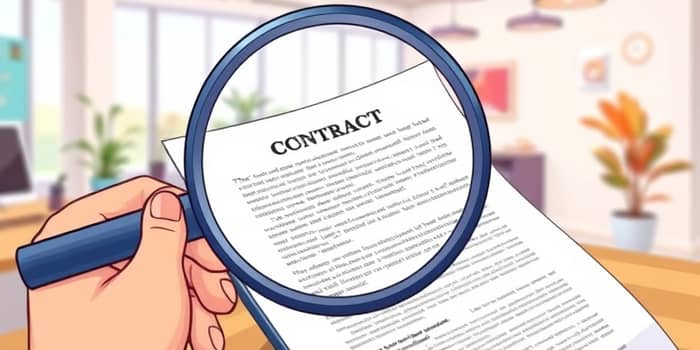
For instance, a 2017 ruling by the Audiencia Provincial de Castellón nullified a credit card contract with tiny text requiring a magnifying glass.
The Tribunal Supremo reinforces that clauses must be clear and accessible, not merely legible on paper.
- Revolving credit cases are a primary focus, with thousands pending due to economic pressures like inflation.
- Judgments often cite the need for transparency to uphold consumer rights in financial agreements.
- This judicial trend highlights the proactive role of courts in enforcing consumer protection laws.
Common Abusive Clauses Hidden in Fine Print
Fine print frequently conceals key information that can disadvantage consumers in unexpected ways.
These clauses often include limitations on coverage or basic rights that are not immediately apparent.
Exclusion of company liability is another common tactic used to shift risks onto consumers unfairly.
Hidden costs or excessive fees can accumulate, leading to financial strain for individuals and families.
- Unilateral modification clauses allow companies to change terms without consumer consent.
- Elevated interest rates, sometimes triple the norm, are often buried in small print in revolving credit agreements.
- Such practices impact vulnerable groups, including self-employed individuals and families during economic crises.
Consumers may face unexpected expenses and difficulties in claiming their rights due to these abusive terms.
The emotional toll includes loss of financial peace and increased stress from navigating opaque contracts.
Practical Tips for Consumers Before Signing
Always read every part of a contract, even the fine print, to avoid unpleasant surprises later on.
Use a magnifying glass if necessary to examine small text, and break the document into manageable sections.
Focus on areas detailing risks, obligations, and potential costs to fully understand what you are agreeing to.
- Do not sign anything you do not comprehend; ask the company for clarifications on confusing clauses.
- If terms seem abusive, seek advice from a legal professional before proceeding with the agreement.
- Keep the original contract as proof, which is essential for any future claims or disputes.
Reclaim your power by being vigilant and proactive in contractual matters to protect your interests.
Remember that under Article 1288 of the Civil Code, doubts in contracts are resolved in favor of the weaker party, usually the consumer.
Ignoring fine print can lead to legal and financial nightmares that are difficult to resolve.
Current Context and Future Trends
The revolving credit sector remains highly litigious, with many cases pending in Spanish courts.
Economic factors like high inflation and rising Euribor rates have increased the urgency for consumer awareness.
Regulatory reforms since 2014 have strengthened clarity requirements, but challenges persist in enforcement.
- Other sectors, such as insurance linked to credit cards, are also vulnerable to fine print abuses.
- Future reclamations may expand as consumers become more educated about their rights under the law.
- While fine print is often used to save space, the law mandates it must not hide information intentionally.
This evolving landscape underscores the need for ongoing vigilance and adaptation in consumer protection.
Empower yourself by staying informed and taking action to ensure fair treatment in all contractual dealings.
Referencias
- https://www.autonomosyemprendedor.es/articulo/finanzas-personales/justicia-considera-que-contrato-podria-ser-declarado-nulo-tamano-letra-pequena-es-demasiado-pequena/20230517160320030508.html
- https://buscadorprofesional.com/la-importancia-de-la-letra-pequena-y-los-derechos-del-consumidor/
- https://asesor.legal/analisis-de-los-contratos-de-legalitas-letra-pequena/
- https://www.arrunada.org/es/docencia/materiales/el-proceso-contractual-problemas/123-la-letra-pequena-de-los-contratos
- https://nosoloderecho.com/cuidado-con-la-letra-pequena-en-los-contratos/
- https://delajusticia.com/2024/12/11/cuando-se-ignora-la-letra-pequena-del-contrato-o-de-la-ley/
- https://fegaus.canalsenior.es/actividades/como-leer-la-letra-pequena-contratos-prestamos-y-clausulas-abusivas/
- https://www.abogadium.com/eltintero/articulo/la-letra-pequena
- https://www.comunidad.madrid/servicios/consumo/condiciones-generales-atencion-letra-pequena
- https://mdadefensajuridica.com/derecho-administrativo/firmar-contratos-sin-leer-riesgos-y-consejos/