
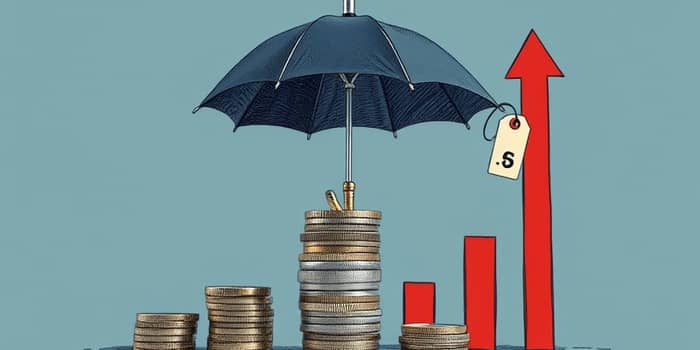
Inflation touches every aspect of our financial lives, slowly eroding the value of hard-earned money. In this article, we delve into the mechanics of inflation and offer practical tools to safeguard your wealth.
By mastering these insights, you can retain control over your finances and preserve your standard of living, even as prices rise.
Inflation affects daily expenses from groceries to rent, making it essential to understand its roots and remedies.
Definition of Inflation
At its core, inflation is the upward movement of prices for goods and services over time. It represents a decline in the purchasing power of money, typically measured by changes in the Consumer Price Index (CPI).
When inflation accelerates, each unit of currency buys fewer items than before, impacting household budgets and corporate planning.
Measuring consumer price changes helps policymakers and investors gauge economic health and make informed decisions.
Causes of Inflation
Economic analysts generally attribute inflation to three main factors. Understanding these drivers can shed light on how and why prices rise.
- A surge in aggregate demand occurs when consumer and business spending outpaces the supply of goods, pushing prices upward during economic booms.
- Rising raw material and labor costs force businesses to pass higher production expenses onto consumers, leading to cost-push inflation.
- Expectations influence wage demands and pricing, as workers seek higher pay anticipating future price increases and firms preemptively raise prices.
These forces can act independently or in combination, creating complex inflationary environments that challenge policymakers and savers alike.
Effects of Inflation
Inflation reverberates through economies and personal finances, often in subtle but impactful ways.
- Significant reduction in purchasing power means individuals must spend more to maintain the same lifestyle, straining household budgets.
- Discouraged savings and investment growth occur when bank interest rates fail to keep pace with inflation, eroding real returns over time.
For retirees on fixed incomes, inflation can be particularly harsh, as living costs for essentials like healthcare often outstrip annual cost-of-living adjustments.
Protecting Your Purchasing Power
While inflation is a fact of economic life, individuals can take proactive steps to shield their wealth from its eroding effects.
- Invest in inflation-linked bonds like TIPS—their principal and interest payments adjust automatically based on inflation data.
- Diversify into tangible real assets such as real estate and commodities, which historically appreciate when prices rise.
- Consider inflation-resistant dividend-growth stocks that increase payouts over time, offering an income stream that can keep pace with costs.
- Use annuities with cost-of-living adjustments to guarantee a steady income that rises alongside inflation.
- Adopt dynamic investment withdrawal strategies for retirees, adjusting distributions based on market performance and inflation trends.
- Maintain funds in interest-bearing accounts to protect short-term savings from losing value to mild inflation.
Combining these approaches in a diversified portfolio can provide a robust defense against price increases and help you meet long-term financial goals.
Statistics and Real-World Examples
Historical trends highlight the impact of inflation and the importance of preparedness.
These figures underscore how quickly inflation can surge under certain economic pressures, from oil shocks to global disruptions.
For instance, homeowners who locked in mortgage rates during high-inflation decades saw their real housing costs fall significantly over time.
Current Context and Future Outlook
The post-pandemic world has ushered in renewed inflationary pressures, fueled by supply chain dislocations, fiscal stimulus measures, and geopolitical tensions.
As central banks strive to balance growth and price stability, interest rate adjustments and monetary policies will play critical roles in shaping future inflation trajectories.
By staying informed and adjusting investment strategies accordingly, individuals can navigate uncertainty and continue to protect their purchasing power.
Adapting to an evolving economy requires vigilance, flexibility, and a willingness to leverage diverse financial tools.
With careful planning and disciplined action, you can build a resilient portfolio that withstands inflationary tides and supports long-term prosperity.
References
- https://www.pgpf.org/article/what-is-inflation-and-why-does-it-matter/
- https://www.alliancebernstein.com/us/en-us/investments/ab-market-views/how-to-protect-your-clients-from-inflation.html
- https://www.rosenbergresearch.com/2025/05/26/understanding-inflation-causes-effects-and-solutions/
- https://mannawealthmanagement.com/5-ways-to-protect-your-wealth-from-inflation-in-2025/
- https://www.rba.gov.au/education/resources/explainers/causes-of-inflation.html
- https://duncangrp.com/retirement-inflation-and-purchasing-power-risks/
- https://www.independent.org/article/inflation-causes/
- https://www.fidelity.com/learning-center/wealth-management-insights/6-ways-to-help-protect-against-inflation
- https://www.imf.org/en/Publications/fandd/issues/Series/Back-to-Basics/Inflation
- https://www.unfcu.org/financial-wellness/protect-your-money-during-high-inflation/
- https://www.congress.gov/crs-product/IF10477
- https://goldstonefinancialgroup.com/the-impact-of-inflation-on-fixed-income-investments-and-how-to-protect-your-purchasing-power/
- https://www.blackrock.com/us/individual/education/inflation
- https://www.severnfa.com/resource-center/money/understanding-and-protecting-your-purchasing-power
- https://www.meetbreeze.com/blog/what-is-inflation/