
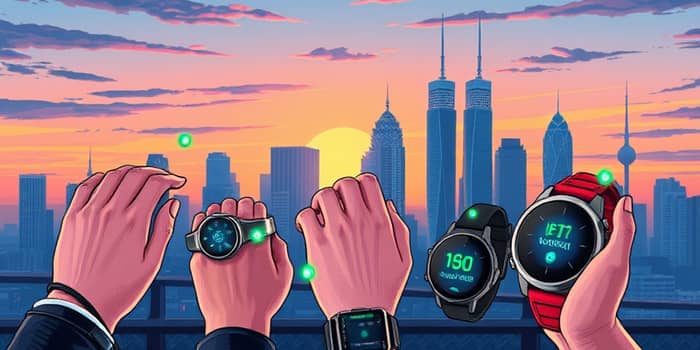
Every day, transactions evolve in ways that challenge our imagination and reshape consumer behavior. What once seemed like science fiction—paying with a ring or a fitness band—has fast become a reality. As we stand on the brink of a new era, wearable and embedded cards promise to transform commerce into an almost invisible act, unlocking faster checkouts and deeper integrations with our lives.
In this comprehensive exploration, we delve into the data driving this revolution, highlight real-world use cases, and offer practical guidance for individuals, businesses, and developers eager to harness the full potential of contactless wearables.
Market Trends Guiding a Digital Evolution
By 2025, the global landscape will witness a surge as the global wearable payments market approaches $78 billion. From smartwatches to NFC-enabled rings and embedded cards, shipments are set to exceed 570 million units that year. Growth is fueled by rapid digitization, urbanization, and smartphone penetration across Asia-Pacific, while North America and Europe maintain strong leadership positions.
Contactless technology—dominated by NFC—drives mainstream adoption. Nearly 90% of new wearables support tap-and-pay, while QR codes and RFID serve niche applications. Behind the scenes, R&D investment has surged 25% in 2025, prioritizing biometric authentication and AI-driven fraud detection to safeguard every swipe and tap.
- Asia-Pacific: Fastest growth region, rising urban smartphone users.
- North America & Europe: 65% combined market share, driven by infrastructure.
- Middle East, Africa & Latin America: Emerging markets with government-led cashless initiatives.
Integration Beyond Payments: Building Ecosystems
Wearables now extend past the checkout line, embedding themselves within IoT frameworks. From smart home controls to transit fare adjustments, devices contribute to an interconnected lifestyle. Experts predict a 12% incremental usage increase by 2025 due to seamless, secure, highly integrated tools that blend health monitoring, energy billing, and public transit in one device.
This expansion manifests in real-time actions: wristbands unlocking doors, embedded cards activating ride shares, and rings toggling home lighting. The promise lies in multicurrency transactions across global markets, empowering travelers and expatriates to move money without barriers or extra fees.
Use Cases That Illustrate the Potential
To appreciate the tangible impact, consider how wearable payments are already reshaping industries worldwide. Retail remains the cornerstone, but hospitality, entertainment, and even charitable giving are racing to integrate contactless wearables.
Additional niches—health-related payments, charity donations, and cryptocurrency transactions—are carving out pockets of growth. While still smaller in volume, these segments demonstrate the broad adaptability of payment wearables. Charity drives via wristbands have seen an 18% increase, and select fitness trackers now process insurance premium payments.
Adoption Strategies for Consumers and Merchants
Embracing wearable payments means understanding both user needs and technical hurdles. For consumers, selecting devices that align with lifestyle, budget, and security preferences is key. Look for strong biometric safeguards and open API ecosystems that ensure ongoing feature updates.
- Prioritize devices with robust tokenization and encryption.
- Choose wearables offering multicurrency support for global use.
- Seek platforms backed by reputable financial institutions and tech partners.
Merchants, meanwhile, should explore tangible, cost-effective point-of-sale solutions such as tap-to-mobile readers that eliminate bulky terminals. Pilot programs in small businesses can showcase improved throughput and customer satisfaction, laying the groundwork for full-scale rollout.
Addressing Challenges and Ensuring Trust
Despite rapid momentum, hurdles remain. High initial device costs and lingering privacy concerns can stall widespread acceptance. Interoperability between competing standards—NFC, RFID, QR codes—demands collaborative efforts from industry consortia and regulators.
Security is non-negotiable. Deploying home-to-work payment ecosystem integration hinges on transparent policies, regular software updates, and consumer education about safe usage. Institutions must commit to open dialogue on data handling, breach responses, and third-party audits to maintain user confidence.
Looking Ahead: What Comes Next
Innovation shows no sign of slowing. The next frontier includes solar-powered charging bands, voice-activated transactions, and deeper AI personalization that anticipates purchase intent. Government incentives in emerging markets will propel growth, while public-private partnerships develop infrastructure for a cashless future.
We foresee a world where your device not only pays but also advises—suggesting transit options, monitoring budgets, and integrating loyalty rewards in real time. As cities become smarter, wearables will serve as passports to frictionless living, from grocery aisles to office entrances.
Ultimately, wearable and embedded payment technologies are more than conveniences; they represent a shift toward truly connected living. By aligning innovation with user trust and practical design, this paradigm promises a future where every transaction enriches our daily experiences.
References
- https://coinlaw.io/wearable-payments-technology-statistics/
- https://straitsresearch.com/report/wearable-payments-market
- https://www.nmi.com/blog/nmi-2025-predictions-contactless-payments-will-spread-far-and-wide/
- https://gulfmanagementsystems.com/2025/07/23/the-future-of-contactless-payment-10-trends-businesses-cant-afford-to-ignore/
- https://thepaymentsassociation.org/article/uk-consumer-payment-trends-2025-insights-from-the-latest-behaviour-survey/
- https://www.juniperresearch.com/research/fintech-payments/core-payments/contactless-payments-research-report/
- https://www.thebusinessresearchcompany.com/report/contactless-payment-global-market-report
- https://nrspay.com/2025/08/25/credit-card-trends-2025/