
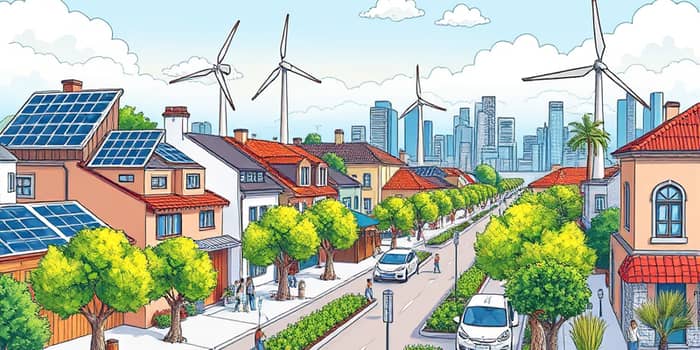
In a world faced with urgent environmental challenges, green loans stand out as a beacon of hope. By channeling capital into projects that foster renewable energy, resource efficiency, and clean transportation, these specialized financing products are helping to shape the global transition to sustainability. Whether for individuals retrofitting a home or businesses investing in solar farms, green loans unite purpose with practical benefits.
Definition and Purpose
Green loans are debt instruments whose proceeds are earmarked exclusively for projects with clear environmental benefits. Unlike standard financing, their core purpose is to support initiatives that reduce carbon emissions, conserve resources, or enhance ecosystem health.
Common categories include:
- Renewable energy installations such as solar photovoltaic arrays and wind farms
- Energy efficiency upgrades, including high-performance insulation, efficient HVAC systems, and LED lighting
- Clean transportation options, notably electric vehicles and charging infrastructure
- Pollution prevention measures and sustainable agricultural practices
Key Features
What sets green loans apart is their strict eligibility requirements and structured oversight. Borrowers must demonstrate that funds are allocated to certified green activities, often validated by recognized standards such as the Green Loan Principles (GLP) established by ICMA and LMA.
Core features include:
- Use of proceeds tracked and managed according to clear guidelines
- lower interest rates and flexible terms offered as incentives for sustainable investment
- Third-party verification and periodic audits to ensure compliance
- transparent impact reporting processes covering metrics like energy saved and emissions reduced
Types of Green Loans
As the market diversifies, lenders now offer a range of green loan products tailored to different borrowers:
- Green personal loans for home energy renovations and efficiency projects
- Green home equity loans leveraging property value for larger sustainable upgrades
- Green commercial loans to fund businesses adopting renewable energy or green building standards
- Green auto loans dedicated to purchasing electric and alternative-fuel vehicles
- Municipal and nonprofit loans for community-wide infrastructure, water conservation, and public transport improvements
Green Loans vs. Traditional Loans
Understanding the distinction between green and conventional financing is critical for borrowers evaluating their options. Green loans often deliver both environmental and financial value.
Benefits of Green Loans
Investing in green projects via dedicated financing unlocks a suite of advantages that resonate across environmental, financial, and social dimensions.
- direct environmental benefits through reduced greenhouse gas emissions and energy consumption
- enhanced property values and branding as sustainable features attract buyers and customers
- Access to grants, rebates, or tax credits that lower overall financing costs
- Support for local economies and job creation in renewable energy and efficiency sectors
Global Market Context
The green loan market has experienced exponential growth in recent years, reflecting a surging appetite for sustainable investment. Corporations, governments, and individuals are all tapping into this pool of capital to align their activities with international climate commitments.
While exact figures vary by region, it is evident that green financing volumes are on an upward trajectory, driven by policy incentives, investor demand, and a broader shift toward alignment with climate action goals.
Regulatory and Industry Standards
The backbone of credibility in green lending lies in voluntary frameworks like the Green Loan Principles. These guidelines set forth:
- Clear criteria for eligible projects and use of proceeds
- Robust management of funds to prevent diversion
- Regular reporting on environmental performance metrics
Adoption of these standards ensures transparency and fosters investor confidence, ultimately driving down financing costs and expanding market access.
Myths and Misconceptions
Despite growing popularity, green loans are still subject to misconceptions. Two common myths include:
Myth: Green loans carry higher rates than standard loans. In reality, many lenders price these products competitively, factoring in incentives and reduced risk.
Myth: Only large entities can secure green financing. The market is surprisingly inclusive, offering tailored solutions for homeowners, SMEs, municipalities, and nonprofits.
Practical Considerations for Borrowers
Prospective borrowers should prepare comprehensive documentation, including energy audits, project plans, and impact forecasts. Lenders often provide advisory services such as green consulting or feasibility studies to help clients meet strict qualification criteria.
Effective collaboration between financiers, project developers, and third-party verifiers is essential to maintain trust and ensure funds deliver real-world environmental improvements.
Future Outlook
Looking ahead, green loans are poised to integrate more deeply with broader sustainable finance instruments, including green bonds and sustainability-linked loans. Innovations such as performance-based rate adjustments promise to further align borrowing costs with actual environmental outcomes.
As regulatory frameworks tighten and corporate responsibility gains momentum, green loans will play a pivotal role in mobilizing capital toward a cleaner, more resilient planet.
By embracing these purpose-driven financial tools, borrowers not only secure competitive funding but also contribute to a legacy of environmental stewardship. Green loans exemplify how finance can be a powerful catalyst for positive change, driving both profitability and planetary health.
References
- https://www.biz2credit.com/green-energy-financing/green-loans-sustainable-future
- https://www.shriramfinance.in/financial-faq-how-do-green-loans-differ-from-traditional-loans
- https://www.mhc.ie/glossary/green-loans
- https://www.ecofy.co.in/blogs/green-loans-vs-traditional-loans-whats-best-your-wallet-planet
- https://www.slaughterandmay.com/insights/new-insights/2025-updates-to-the-green-and-social-loan-principles/
- https://www.cuselect.com/what-are-green-loans/
- https://www.worldbank.org/en/news/feature/2021/10/04/what-you-need-to-know-about-green-loans
- https://www.stephensonharwood.com/news/demystifying-decarbonisation-exploring-green-loans-and-sustainability-linked-loans
- https://redcliffetraining.com/blog/lma-green-loan-principles
- https://www.financenation.com/blog/green-loans-common-myths-and-misconceptions-debunked
- https://www.weesg.com/the-role-of-the-green-loan-principles-in-financing-the-sustainable-and-net-zero-transition/
- https://online.jwu.edu/blog/green-finance-investing-with-sustainability-in-mind/
- https://www.sustainalytics.com/esg-research/resource/corporate-esg-blog/simplifying-sustainable-finance-green-loans-vs-green-bonds-vs-sustainability-linked-loan-and-more